Choosing a Modern Dental Office in Raleigh: What Sets a Great One Apart
Choosing a dental office in Raleigh, such as View Dental Raleigh, for your family means deciding who you will trust, twice a year and for many years, to catch small problems early, explain them honestly, and treat each person in your household as someone with their own priorities. Nearly every practice website promises gentle care and advanced technology, so those promises will not help you choose. How an office actually runs will. What happens at the first visit? Do you see your own X-rays, or does someone just tell you what they show? How much of your family’s care stays in one building? Is cost discussed openly, or does it show up as a surprise?
This guide covers what separates a practice that educates from one that sells, the questions to ask before you commit, and the red flags that mean you should keep looking. For each point, we explain how View Dental Raleigh handles it, so you can see what the standard looks like in practice. We also do not assume every patient has the same priorities.
What Should Your First Visit Tell You About a Practice?
Your first visit should show you whether a practice listens before it recommends. A patient-centered dental office performs a thorough evaluation, asks what you want from your care, and shows you what it finds before discussing any treatment.
A rushed office is easy to recognize. X-rays are taken almost as soon as you sit down, the exam is brief, and a printed treatment plan is waiting at the front desk before anyone has asked what matters to you. For a family, that pattern repeats at every checkup. Over time it teaches everyone in the house that the dentist is a place where things happen to you rather than with you. A well-run office reverses the order and starts with a few human questions:
- What brought you in, and is anything bothering you now?
- Has an earlier dental experience made appointments hard for you or your child?
- What matters most to you: keeping your natural teeth, limiting time off work, managing cost, or how your smile looks?
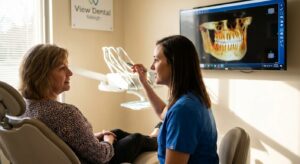
At View Dental Raleigh, a first appointment begins with intraoral photographs, X-rays, and digital scans, so you can see the condition of your own mouth instead of picturing it from a description. Before any plan is presented, the team asks about your goals. If the View Dental Raleigh dentist spots a crack, a cavity, or a restoration that is breaking down, he pulls up the photograph or X-ray and shows you before he talks about treatment. He then sorts what he found into three groups: healthy, worth watching, and ready to be addressed. Not every finding is presented as an emergency, because most are not.
This matters most when you bring in someone who has avoided the dentist for years, such as a partner who dreads the chair. That person does not want a lecture. They want to understand where they stand and to feel that the next step is their decision. An office that offers that on the first day has earned something worth far more than one appointment.
Digital Technology That Shows You Instead of Asking You to Trust It
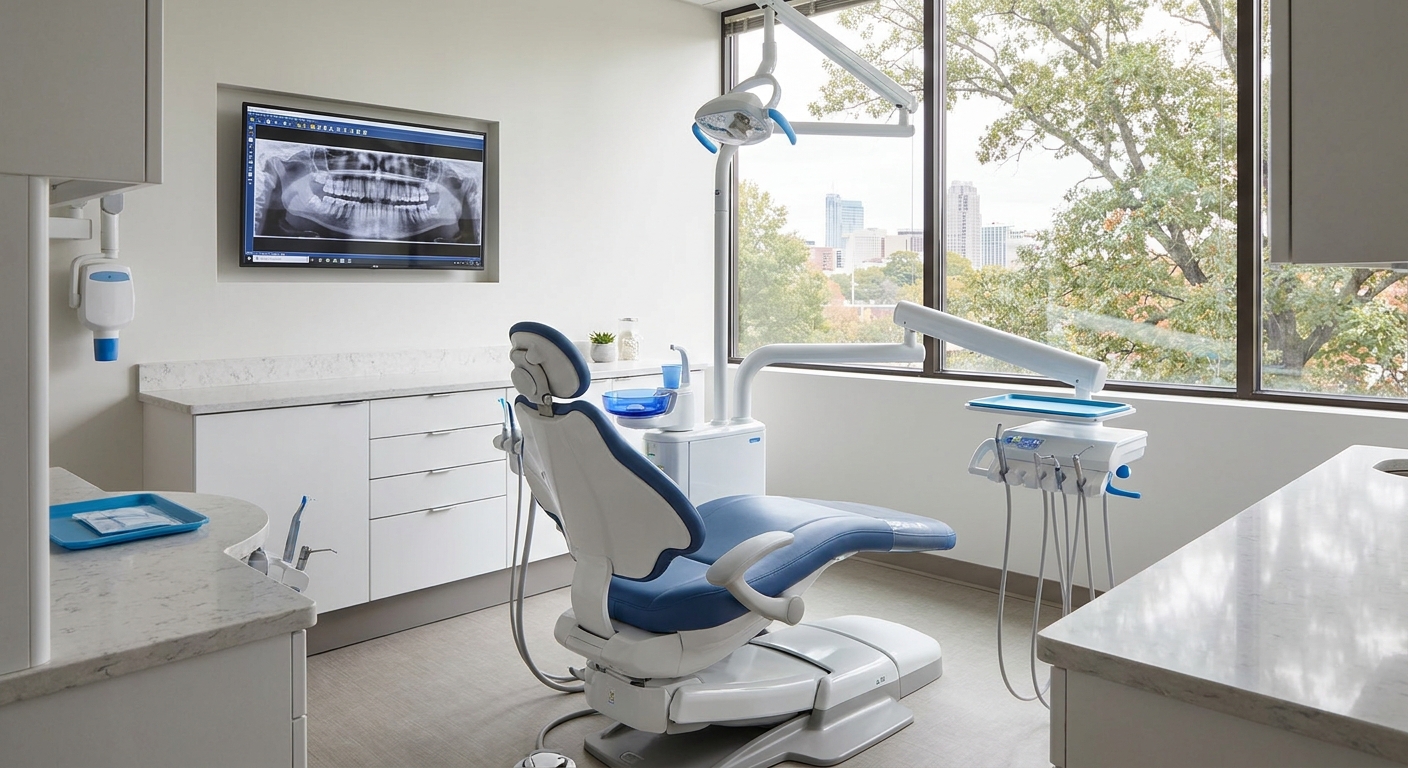
Once you know an office listens, the next question is how it explains what it finds. Modern diagnostic tools matter because they let you see what the dentist sees. Intraoral photographs, digital X-rays, and 3D scans turn the conversation from “trust me” into “here, look,” which keeps the focus on education instead of selling.
Consider how findings used to be shared. A dentist looked in your mouth, described a problem in unfamiliar terms, and asked you to approve treatment you could not see. Even with an honest dentist, that leaves families unsure, especially when the recommendation is expensive. An intraoral photograph fixes this in seconds, because a magnified image of a fracture line tracking along an old filling is far easier to grasp than a verbal explanation.
View Dental Raleigh uses digital X-rays, CBCT 3D imaging, and intraoral 3D scans rather than depending entirely on traditional physical impressions. The dentist chose digital scanning for two reasons. First, a scan records your anatomy, your bite, and restorative details in a format that connects directly with the rest of the office’s digital workflow. Second, up-to-date images give you and the dentist a visual record to compare across visits, so nobody has to rely on memory of what a tooth looked like three years ago. The images carry the explanation, which keeps the discussion about education rather than a sales pitch.
The same images make it easier to sort findings clearly. A healthy tooth needs nothing. A small area of early wear or a shallow groove might go on a “watch” list, where preventive steps like sealants or fluoride treatments may make sense, especially for children. A tooth with active decay or a broken restoration moves to “needs attention.” That structure helps a family plan without panic.
Imaging should also fit the person in the chair. When a practice tailors which images it takes to what the clinical exam reveals rather than following a rigid protocol, it respects both your time and your health. An office that tells you why it is taking a particular image for your child, and why it may skip one this visit, is putting individual needs first.
Why Does Comprehensive Care Under One Roof Matter for a Busy Family?
Clear images are most useful when the same office can act on them. Comprehensive care under one roof means one practice can evaluate the whole mouth, recognize problems that are connected, and plan treatment from urgent relief to long-term repair. You leave with a plan, not a stack of referrals.
View Dental Raleigh provides preventive care and cleanings, comprehensive exams, oral cancer screenings, sealants, fluoride treatments, tooth-colored fillings, crowns, bridges, root canal therapy, extractions, full and partial dentures, denture adjustments and realigns, dental implants, implant-supported dentures, and emergency appointments. For a family, that means the office cleaning your daughter’s teeth can also treat your cracked molar and fit your parent’s partial denture. Records, images, and the relationship all stay in one place.
One patient we treated at View Dental Raleigh drove up from Fayetteville with tooth pain while she was getting ready for her second wedding. The emergency visit uncovered much more than one sore tooth: widespread decay, several lower premolars that were broken and infected, and a number of missing back teeth. An office built only for one-off emergency visits might have treated the painful tooth and sent her home. Instead, the team completed a full evaluation and put her care in order:
- First, they cleared the infection and removed the teeth that could not be saved, which got her out of pain.
- Then they restored every tooth that could be kept.
- After that, they made her an aesthetic flexible partial denture to replace the missing back teeth, while keeping dental implants available as a future option.
Her wedding was the deadline that mattered most to her. Because emergency treatment and comprehensive restorative care happen in the same office at View Dental Raleigh, she moved from urgent care through the restorative phase in a series of coordinated visits, and she smiled with confidence on her wedding day.
For your family, the takeaway is about sequence. Urgent problems come first, and long-term decisions come later, when you have more information. A single practice that manages the whole plan can separate the ideal destination from the most appropriate next step. If cost or timing rules out the ideal option today, that is not a dead end. It simply means the plan unfolds in phases.
How Does Advanced Clinical Training Change What a General Dentist Can Do?
What a practice can keep under one roof depends heavily on the dentist’s training. Education beyond dental school determines which cases a general dentist can plan and finish in-house and which get sent elsewhere, and the deeper that training goes, the more of your family’s care stays coordinated.
Every licensed dentist holds a DDS or a DMD, which are equivalent degrees with the same core education. The North Carolina State Board of Dental Examiners requires continuing education for license renewal each year, but that requirement is a floor, not a measure of skill. The better question is what a dentist has chosen to study beyond it, and how that shows up in the cases they take on.
The treating dentist at View Dental Raleigh holds a DMD and has pursued intensive continuing education in dental implants, restorative planning, and full arch reconstruction. He regularly attends multi-day courses and study clubs focused on surgical technique, bone grafting protocols, and the planning behind complex implant cases. That training shapes decisions families at View Dental Raleigh rarely see: how an infected tooth is evaluated before extraction, how a failing bridge is replanned instead of simply swapped out, and how a denture is designed around the bone and tissue that remain. It is also why a case like the one described above could be handled start to finish in one office rather than split across several practices.
When you compare practices, ask for specifics instead of general claims of experience:
- Which kinds of cases does the dentist complete in the office, and which are referred out?
- What recent training has the dentist completed?
- Does the dentist belong to professional organizations such as the Academy of General Dentistry (AGD)?
The AGD’s Fellowship designation (FAGD), for example, requires 500 hours of approved continuing education and a comprehensive exam, among other requirements, which makes it a useful benchmark for serious ongoing study. A confident dentist will answer these questions plainly and will tell you when a case is better served by a specialist.
The Team Behind the Dentist Decides How Every Visit Feels
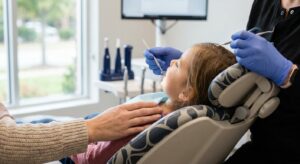
Training matters, but it is only part of the experience. Hygienists, assistants, and front office staff account for most of your family’s time in the office, and a team that knows your history makes routine visits feel personal rather than transactional.
Think about a typical checkup. Most of it is spent with a hygienist, a good part with an assistant, and scheduling and billing happen at the front desk. The dentist may be excellent, but if everyone else treats your family as names on a schedule, the whole visit will feel that way. For a parent booking appointments for several people, the team often decides whether a practice becomes a long-term relationship or a place you quietly stop going.
At View Dental Raleigh, the hygienists, assistants, and front office team make a point of getting to know patients and remembering what matters to each of them. In practice, that might look like a hygienist remembering that your son does better when each step is explained first, an assistant recalling that you like a short break during longer procedures, or the front desk knowing that early morning slots are the only ones that work for you. None of this is dramatic, but together these details separate a visit you dread from one you can manage.
Some patients report feeling heard, not judged or hurried. That is what most families are looking for, and it matters most for anyone in your household who has had hard experiences before, because trust with a dental team is usually rebuilt through small, consistent moments.
Will Cost or Coverage Keep Your Family From Starting Care?
It does not have to. View Dental Raleigh accepts Medicaid, offers Cherry financing, and welcomes cash-pay patients, so families can begin care before small problems become emergencies.
Cost is one of the most common reasons families put off dental visits, but dental problems rarely wait. A small cavity that could have been a simple tooth-colored filling can grow into a problem that needs root canal therapy and a crown. The longer care is delayed, the larger and more expensive the eventual treatment tends to be. Removing financial barriers early protects your family’s health as much as your budget.
Families with Medicaid often discover that not every dental office accepts it. The state maintains NC Medicaid’s dental provider directory to help locate participating providers, and the NC Division of Public Health lists regional Oral Health Section contacts for families seeking public dental resources. View Dental Raleigh accepts Medicaid so families can get care with the coverage they already have. What Medicaid covers depends on the plan and the procedure, so the front office can help you understand your benefits before treatment begins.
For patients paying out of pocket at View Dental Raleigh, Cherry financing lets you spread treatment costs into payments, with approval and terms based on your application. Combined with a phased plan that separates urgent needs from long-term goals, financing can let you start with what matters most now and schedule the rest over time.
Whichever office you choose, ask for a clear written estimate before any work begins. It should list the benefits, limitations, maintenance, timing, and cost of each option, so you are comparing real numbers instead of guessing.
Red Flags That Signal You Should Keep Looking
Knowing what good care looks like makes the warning signs easier to spot. Keep looking if a practice presents a treatment plan before asking about your goals, pushes you to schedule everything today, brushes off your questions, or explains findings without showing any images. Each of these suggests the office puts volume ahead of your understanding.
A plan before a conversation. If a treatment plan appears before anyone asks what you want, it was built around the office’s schedule, not your priorities. A family on a tight budget, a patient determined to keep every natural tooth, and a patient who wants the fastest route to comfort may reasonably choose different paths from the same exam findings.
Pressure to book everything today. Urgent problems, such as an infection or a broken tooth causing pain, deserve prompt attention, and a good office will say so clearly. But when every finding is framed as urgent and you are asked to commit to a full plan on the spot, you are being sold to, not advised.
Dismissive answers to questions. If you ask about alternatives, timing, or cost and get a vague or impatient reply, take note. Professional ethical standards call for dentists to involve patients in decisions and to explain treatment options in understandable terms. Questions are part of that process, not an obstacle to it.
No images, only descriptions. An office with intraoral cameras and digital X-rays that still asks you to take its word for a finding is missing an easy chance to build trust. You should see what the dentist sees before you agree to treat it.
Questions to Ask Before You Commit to a New Dental Office in Raleigh
Ask how the first visit works, whether findings are shown on a screen, what care stays in the office, what coverage and financing are accepted, and how emergencies are handled. Clear, specific answers are a strong sign that the practice will be a good long-term fit for your family.
You can ask most of these over the phone before booking, and how the office responds tells you nearly as much as what it says. Here is a simple way to judge what you hear:
| Question to ask | A reassuring answer sounds like | An answer that should concern you |
|---|---|---|
| What happens at the first visit? | A thorough evaluation with imaging and time to talk about your goals before any plan | “We’ll get X-rays and go from there” |
| Will the dentist show me findings on a screen? | Yes, with photographs or X-rays explained as you look at them | “The dentist will tell you what you need” |
| Do you handle restorative work and emergencies here? | A specific list of what stays in the office and when referrals make sense | Frequent referrals for routine restorative care |
| What coverage and financing do you accept? | A direct list, such as Medicaid, Cherry financing, and cash pay | Vague answers or “we’ll figure it out after” |
| How do you plan treatment when there is a lot to do? | A phased plan that separates urgent needs from long-term goals | Pressure to complete everything at once |
When an office answers these openly, you are seeing shared decision-making at work. You bring your family’s priorities, the dentist brings the clinical findings, and the plan comes from both. That kind of relationship holds up through years of checkups, surprise toothaches, and the bigger decisions that come with age.
What Families Still Want to Know Before They Book
What should happen during my first visit to a dental office in Raleigh?
Expect a thorough exam with intraoral photographs, digital X-rays, and digital scans, time to discuss your concerns and goals, and a clear explanation of what the dentist finds. Findings should be sorted into what is healthy, what to watch, and what needs attention. You should not feel pressured to schedule treatment on the spot, and any urgent issues should be explained plainly so you can decide what comes first.
How do I know if a dentist is using modern technology?
Ask whether the office uses intraoral photographs, digital X-rays, intraoral 3D scans, and CBCT 3D imaging. Then ask whether those images are shown to you on a screen during the appointment. Technology only helps you if it is used to explain your care, not just to record it.
Why does it matter if a dental office accepts Medicaid in Raleigh?
Not every office accepts NC Medicaid, so families with that coverage may delay care, travel farther, or pay out of pocket. An office that accepts Medicaid removes one of the biggest barriers to regular checkups and early treatment, which can help keep small problems from turning into painful, more costly ones.
What does comprehensive care under one roof actually mean?
It means one practice handles cleanings, exams, fillings, crowns, bridges, root canal therapy, extractions, dentures, implants, and emergency care, so you are not sent to several offices across town. Keeping records and planning in one place lets treatment follow a logical order, from urgent relief through restoration, often in fewer coordinated visits.
How can I tell if a dentist has advanced training beyond dental school?
Ask what continuing education the dentist has completed in areas like implant surgery or restorative planning, and roughly how many hours. Ask whether they belong to organizations such as the Academy of General Dentistry or the American Academy of Implant Dentistry, and which complex cases, such as full arch work, they handle in the office. Specific answers say more than general claims of experience.
What are red flags that a dental office prioritizes sales over patient care?
Watch for treatment plans presented before anyone asks about your goals, pressure to schedule everything immediately, and findings explained without images. Also watch for impatient or dismissive replies when you ask about alternatives, timing, or cost. A patient-centered office welcomes those questions and answers them clearly.
Start With One Unhurried Exam
Schedule a first visit at View Dental Raleigh, a dental office in Raleigh where the dentist listens to your goals before recommending treatment. He shows you findings on photographs and X-rays so you understand exactly what is happening in your mouth, and you leave with a phased plan that separates what needs attention now from what can wait.
Here is one thing you can do this week, whichever practice you are considering. When you call, ask a single question: “Will the dentist show me what they find before recommending anything?” A practice that says yes without hesitating has already told you most of what you need to know about how it will treat your family.
Experience the Difference Modern Dentistry Can Make
If you’ve been putting off finding a dental home because you’re unsure what to look for or worried about feeling comfortable, we understand. Our team at View Dental Raleigh combines the advanced technology and patient-centered approach you just read about with a genuine commitment to making every visit straightforward and stress-free. We’re here when you’re ready to see what modern dental care in Raleigh should feel like.
Individual results vary, and treatment recommendations depend on each patient’s clinical findings and goals.