Expertise provided by ccviewdental, Calvin Chen
If you have been chewing around a sore spot or leaning on adhesive for years, you may be wondering why you can’t just get this done in one visit, and whether someone will lecture you when you finally call. Both are fair questions, and View Dental Raleigh hears them often. This guide walks through the full dentures process step by step: what each visit is for, what the lab does between appointments, how long it may take, and what the first year in a new denture can be like.
People who ask about full dentures have often been putting it off for a long time. Some have broken or infected teeth and have learned to hide their smile in photos. Others already wear a denture that stopped fitting years ago, so they get by on adhesive and skip foods they used to enjoy. Many are embarrassed and expect a lecture. At View Dental Raleigh, the first goal is to understand what you want to accomplish, whether that is chewing more comfortably, getting out of pain, or feeling more at ease when you smile. The plan comes after that.
Why can’t a full denture be made in one visit?
A full denture is built in stages because each appointment has a single job, and a dental lab builds the denture in the time between those appointments. Skipping a step to save time can contribute to fit and appearance problems.
A denture isn’t an off-the-shelf item. Your gums have their own shape, your jaws meet in their own way, and your face needs teeth of a certain size, shade, and position. At View Dental Raleigh, the dentist explains it this way: one visit captures the shape of your gums, one sets your bite, and one lets you see the denture and request changes before it’s final. The lab works between those visits. A federal health service’s published denture appointment steps follow the same pattern: impressions, bite records, a try-in, delivery, and then follow-up visits.
Here is what can happen when a step gets rushed. If the impression is off, the denture may not match your gums, so it can rock when you bite down on one side. That rocking can rub a sore spot, and some people respond by adding more adhesive. If the try-in is skipped, you may not see the teeth until they are already set in the final base, which is when some people find the teeth look too big, too white, or simply not like them. In the dentist’s words, a denture that rocks, rubs, or doesn’t look like you is “the kind that ends up in a drawer.”
So the extra visits aren’t padding. Each one is a checkpoint for fit, comfort, and appearance. The timelines below are typical, not promised, because every mouth is different and how quickly a denture feels familiar varies from person to person.
What happens at the first exam and consultation?
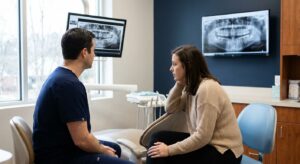
Your first visit at View Dental Raleigh is an exam and a conversation. You talk about what’s bothering you, the team takes intraoral photos, X-rays, and digital scans, and the dentist shows you what they see before recommending anything.
The visit starts with your concerns. Maybe a front tooth broke and you stopped smiling. Maybe your denture slides when you talk, or one tooth is throbbing and you’re worried about the rest. The team asks how your past dental visits went and what worries you about this one. Then the dentist goes tooth by tooth, using your own images, to show which teeth may be treatable and which may not. This is where we separate urgent problems from issues that can be addressed over time.
If you’re nervous, the pace slows down. Before any instrument comes out, you can choose from a comfort menu that includes headphones, water, and a relaxing room, and the team explains in plain words what’s happening next and who’s doing it. If part of the plan worries you, the dentist goes back over it on the photos and X-rays and lets you decide what happens today and what can wait. As the dentist puts it, “I’d rather give up twenty minutes of my schedule than lose them.”
You leave the first visit with an understanding of what’s going on in your mouth, what your options are, and the benefits, limitations, expected maintenance, timing, and cost of each.
What are records, impressions, and the bite recording?
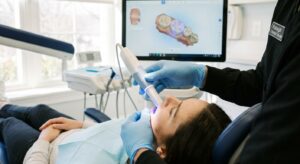
Records are the measurements the lab uses to build your denture. At View Dental Raleigh, that means a digital scan first, then a PVS impression, then a bite recording, and each one captures something different.
The digital scan creates a 3D image of your mouth. It’s quick, and it gives the dentist a detailed digital map to work from. For dentures, though, the dentist doesn’t stop there. A PVS impression comes after the scan. PVS is a precise silicone impression material, and the dentist uses it because, in their words, it’s “the most accurate impression I can get.” That impression records the full shape of your gums and the soft tissue edges where the denture needs to rest and seal. These details can influence whether a denture sits steadily or shifts.
The bite recording captures how your upper and lower jaws should come together. That affects more than chewing. It shapes how much space the teeth fill, how your lips are supported, and how your jaw feels at rest. If the bite is recorded inaccurately, even a denture that matches your gums closely can feel off when you close your mouth.
Think of the records as answers to three questions the lab needs:
- What shape are your gums? (the scan and the PVS impression)
- What do the edges of the tissue look like, in fine detail? (the PVS impression)
- How should your jaws meet? (the bite recording)
Once those answers are in hand, your case goes to the lab. View Dental Raleigh’s dentures are made by U.S. dental labs.
What is the try-in visit and why does it matter?
The try-in is your preview. You see the teeth in your mouth, the dentist checks the look and the bite, and if you want something changed, this is the time to ask.
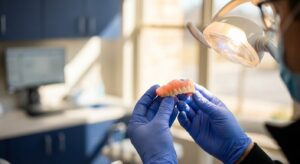
Between records and try-in, the lab uses your impressions and bite record to set denture teeth in a trial base that can still be adjusted. Nothing is final yet, and that’s the point. At the try-in you can look in the mirror, smile, talk, and tell the dentist what you think. Common things people ask about include:
- The shade of the teeth
- The size and shape of the front teeth
- How much tooth shows when you smile or talk
- How your lips and cheeks look with the teeth in place
- How the bite feels when you close
If something needs to change, the dentist notes it and the case goes back to the lab before the final denture is made. A request at this stage generally takes a short extra step, while the same change after the denture is finished can be a much bigger job and may not always be possible.
This visit is also where you get a say, because you aren’t asked to approve something you’ve only seen on a screen. If it helps you decide, ask the team about before-and-after case examples from the office. Seeing how other cases started and finished may make it easier to picture your own, though each person’s result is different.
How long does the full dentures process take in Raleigh?
When no teeth need to come out first, the full denture process at View Dental Raleigh typically takes about 2 to 4 weeks from first exam to delivery. That’s a typical range, not a promise, and your schedule and any changes made at the try-in can affect it.
Here’s how the full dentures process step by step usually lines up:
| Visit | Its job | What happens next |
|---|---|---|
| 1. Exam and consultation | Understand your goals, take photos, X-rays, and scans, review your options | You decide on a plan |
| 2. Records | Digital scan, PVS impression, bite recording | The lab builds a trial setup |
| 3. Try-in | See the teeth, check look and bite, request changes | The lab finishes the final denture |
| 4. Delivery | Fit the finished denture, and you wear it home | Your mouth starts adjusting |
| 5. Adjustments | Address sore spots and fine-tune the fit | Follow-up as needed |
Delivery day is usually the one people look forward to most, but it isn’t the finish line. You wear the denture home, and View Dental Raleigh sees you back for adjustments, because sore spots are common early on. Plan for those visits from the start, the same way you planned for the try-in.
Some patients also have a shorter option. If you still have your original denture, View Dental Raleigh offers a two-visit denture. Your exam will show whether that approach may fit your situation.
What is the full dentures process step by step when teeth need to come out first?
When teeth need to come out first, the process takes longer because your gums need time to heal. View Dental Raleigh often stages it in phases: the teeth causing infection or pain come out first, then the remaining nonrestorable teeth, then the denture.
Staging does two things. It addresses the most urgent problem first, so infection isn’t left sitting while you save up or schedule. It also breaks a large amount of treatment into smaller steps that may be easier to manage, physically and financially. If the whole plan feels like too much at once, phases let you keep moving without feeling pressured to do everything in one sitting. In practice, we separate the ideal destination from the most appropriate immediate path, and both stay in view the whole time.
Healing is the part that surprises people. After teeth are removed, your gums and the bone underneath keep changing for months. A denture made to fit your mouth on one date may fit differently a few months later as things settle. That’s why a denture may need adjustments or a reline during this period. A reline reshapes the inside of the denture to match your gums as they are now. The dentist tells patients this up front, so nobody assumes something went wrong when it happens. It’s an expected part of the process.
If you think you may want implants later, bring it up early. View Dental Raleigh offers bone grafting, which may help preserve or rebuild bone in some situations, and planning for it during the extraction phase can keep future options open. Choosing a conventional denture now doesn’t rule out implants later.
What does the first year with full dentures look like?
Your first year with full dentures is a settling period. You may notice some sore spots early, need a few adjustment visits, return gradually to the foods you like, and possibly need a reline as your tissues change.
In the first days and weeks, a new denture can feel bulky while your tongue, cheeks, and lips learn where everything is. Speech may sound a little different at first, and many people find it gets easier with practice, such as reading out loud. Sore spots are common because the denture is pressing on tissue that isn’t used to it yet, and small adjustments can relieve pressure points. If a spot hurts, come in for an adjustment instead of pushing through it or putting the denture away.
Eating often comes back in stages. Many people start with softer foods cut into small pieces and chew slowly on both sides, which helps keep the denture balanced. Firmer foods may return as your confidence and the fit change. Some people use a small amount of adhesive, especially early on. If you find you need more and more to keep the denture in place, that’s a fit question to bring to your dentist.
Over the longer term, your mouth keeps changing. The American Dental Association notes that dentures need daily care and that, over time, they may need to be relined, rebased, or remade because of normal wear and changes in the mouth. That’s why View Dental Raleigh treats your denture as part of an ongoing relationship. Regular checkups give the team a chance to notice a loosening fit or irritated tissue early.
How much do full dentures cost and how can you pay?
The cost of full dentures at View Dental Raleigh depends on what your exam finds, so you receive a clear total cost before anyone talks about monthly payments.
Several factors shape that total: whether any teeth need to come out, how many extractions are needed and how complex they are, whether bone grafting is part of the plan, whether you need one arch or both, whether the two-visit option fits your situation, and what your insurance benefits cover. Because those vary so much, a single advertised price wouldn’t tell you much. The exam and imaging are what turn an estimate into a real number.
Phasing is one practical way to make treatment more manageable. In one case, a privately insured patient needed full mouth extractions but couldn’t afford the entire copay at once. Instead of putting off all care, View Dental Raleigh divided the treatment by urgency. The teeth with active infection, pain, swelling, or the greatest risk of causing an emergency came out first. The next phase addressed the remaining nonrestorable teeth, followed by the denture phase once the mouth was stable. Each phase was priced separately based on the number and complexity of the extractions and the patient’s insurance benefits, so the patient only had to manage one portion at a time. This was one person’s experience, and plans are built around each patient’s situation.
View Dental Raleigh accepts Medicaid, and Cherry and cash pay are also accepted as ways to pay. What Medicaid covers depends on your specific plan, so call the office to confirm what applies to you before treatment begins.
Are snap-in implant dentures an option to consider?
For some people tired of a loose denture, a snap-in implant denture may add stability. It also involves surgery, healing time, more cost, and its own maintenance, so whether it’s the right choice depends on the individual.
A snap-in denture attaches to dental implants placed in the jaw. The implants act as anchors, so the denture snaps into place instead of relying only on suction and adhesive. View Dental Raleigh places and restores snap-in dentures in-house. Planning starts with a complimentary CBCT scan, a 3D image that shows how much bone you have and where important structures are. The dentist who plans this work has completed hundreds of hours of implant-focused continuing education and invested more than $100,000 in advanced clinical education.
It’s worth weighing the tradeoffs. Implants need enough healthy bone, and bone grafting may help in some cases but adds time. There’s a healing period before the denture is attached. The attachments that hold the denture also wear over time and need periodic replacement. If you’re interested in a fixed full-arch option, the kind that doesn’t come out at all, View Dental Raleigh does not perform that surgery and refers those cases to an oral surgeon partner.
Some patients start with a conventional denture and consider snap-in implants later, once they’re financially and personally ready. In that case, the denture you get now can be one phase of a longer roadmap. To learn how implant cases are planned, read View Dental Raleigh’s guide to dental implants in Raleigh.
What patients ask before their first denture visit
These are the questions people most often have before calling View Dental Raleigh about full dentures. The short answers below cover each one, and your exam will fill in the details for your own mouth.
How many visits does it take to get full dentures?
Most cases follow this pattern: an exam, a records visit, a try-in, delivery, and then adjustment visits. Each visit has one specific job. When no teeth need to be removed, that typically spans about 2 to 4 weeks at View Dental Raleigh.
Can I get full dentures in one day?
A carefully made full denture needs lab work between visits, and rushing it may result in a denture that rocks, rubs, or doesn’t look like you. If you already have a denture, View Dental Raleigh offers a two-visit option that may shorten the process.
How long do I wait for dentures after teeth are pulled?
Longer than the typical 2 to 4 weeks, because your gums need time to heal. Your gums and bone also keep changing for months afterward, so adjustments or a reline are common during that time.
Do new dentures hurt at first?
Sore spots are common early on as your tissue adjusts to the new denture. View Dental Raleigh offers follow-up adjustment visits, which are planned as part of the process.
Does View Dental accept Medicaid?
Yes, View Dental Raleigh accepts Medicaid, and Cherry and cash pay are also accepted as ways to pay. Call the office to confirm what your plan covers for dentures.
Can I switch to snap-in dentures later?
Some patients do. View Dental Raleigh starts with an exam and a complimentary CBCT scan to see whether implants may be an option. Fixed full-arch surgery is referred to an oral surgeon partner.
Why choose View Dental for dentures in Raleigh, NC?
If you want a denture planned around your goals, with no lectures and no rushing, View Dental Raleigh is set up for that. The practice offers comprehensive care under one roof, from extractions and bone grafting to dentures and snap-in implant dentures.
Some patients have told the practice they felt listened to rather than judged or rushed. That matters, because many people arrive carrying more than a dental problem. They’re embarrassed, afraid, or worried about cost after years of avoiding care. The work starts by looking beyond the tooth that hurts today and building a sequence that fits your health, your timeline, and your budget.
One case the practice has shared on social media shows how far some people will travel for care. One patient drove more than an hour each way for every visit while working against a personal deadline. Her treatment was a flexible partial denture, not a full denture, but the approach was similar. First, the team addressed infection and removed broken teeth that couldn’t be predictably saved. Next, they restored the teeth that could be kept. Then they replaced her missing posterior teeth with a flexible partial, and she left with a plan for implants when she’s ready. She kept making the drive, and she said she felt the team understood what she was trying to accomplish.
When you’re ready, call View Dental Raleigh to book a no-pressure denture exam, where you’ll see your photos, X-rays, and scans and get a clear total cost before any monthly payment plan. One tip for that visit: ask to look at your own images before you agree to anything. Seeing your mouth tooth by tooth can help you understand which steps are urgent and which can wait.
Ready to Take the First Step Toward Full Dentures?
Knowing there are several visits and a waiting period in between can make the whole process feel like a lot to take on. It helps to hear it explained for your own mouth and your own situation, with room to ask whatever is on your mind. The team at View Dental Raleigh is happy to talk through what your timeline could look like, so give the office a call when you’re ready.
Individual experiences vary, and timelines, fit, and comfort differ from person to person.