Does Medicaid Cover Dental Cleanings in Raleigh? Coverage Explained
You call to schedule a cleaning for your daughter, and the scheduler asks which Medicaid plan you have. You give the name, then ask whether the cleaning is actually covered or whether you will owe something at the visit. Almost every Medicaid holder in Raleigh wants to know both of those things, coverage and cost, before they book. The answer depends on the North Carolina Medicaid dental rules that apply to your family and on what the dentist finds during the exam. When parents ask us, “Does Medicaid cover dental cleanings?”, the short answer is yes for routine preventive visits. This page explains the details that decide what, if anything, you may pay.
At View Dental Raleigh, we answer this question every week. Families rarely worry about the cleaning itself. They worry about what comes after it: a cavity nobody expected, a treatment plan they cannot afford, or a feeling that saying “Medicaid” changes how they will be treated. Below, we walk through each of those concerns in the order most parents ask about them.
Does North Carolina Medicaid Cover Routine Dental Cleanings?
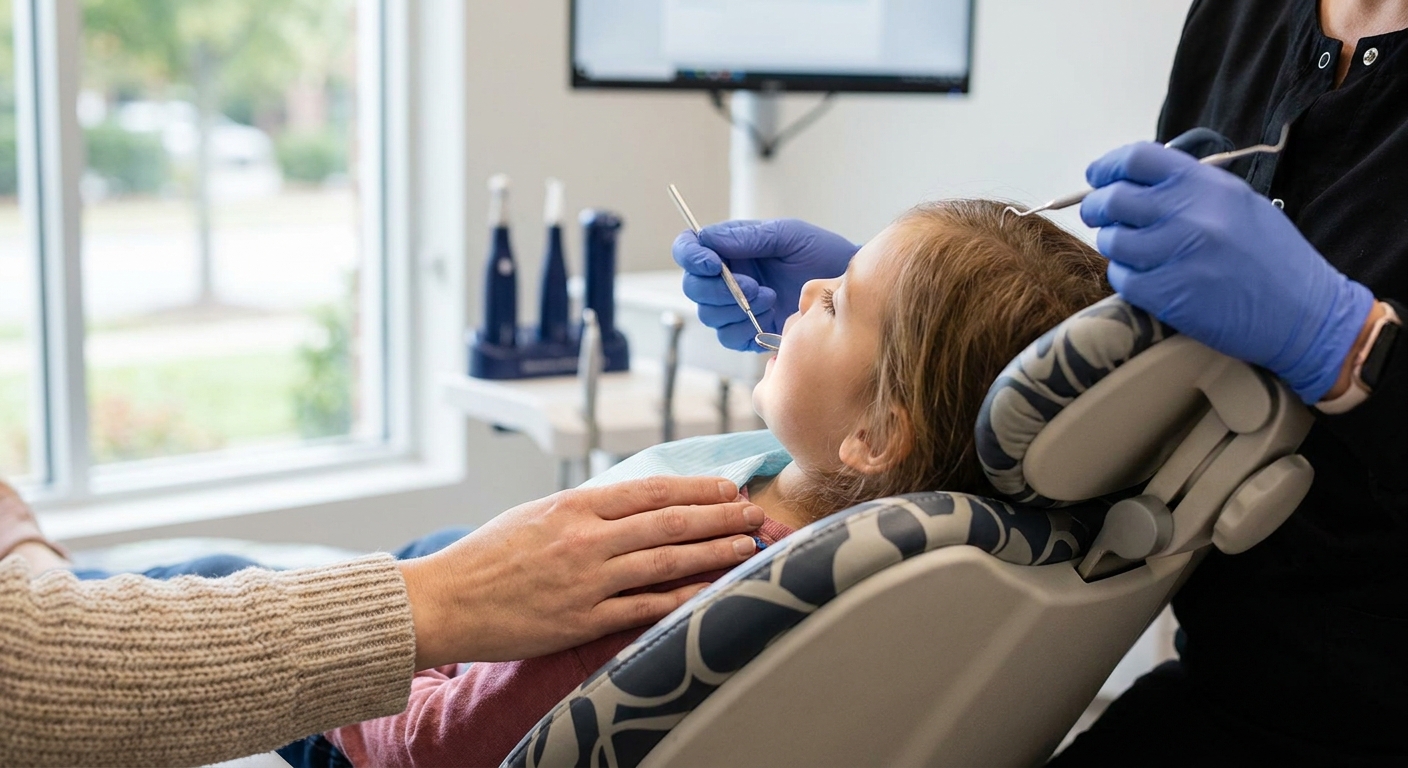
Yes. North Carolina Medicaid covers routine preventive cleanings for both adults and children, typically on a schedule of about one visit every six months, though coverage varies by individual eligibility and plan details. It also covers exams and digital X-rays. For children, it covers fluoride treatments and sealants when they are clinically appropriate. At View Dental Raleigh, we include these services in the same preventive visit when your child’s teeth may benefit from them.
Frequency limits like this are tracked by service date, not by which office you visited. Say your son had a cleaning at another dentist in February and you move his care to us in April. That second cleaning may fall too soon to qualify. If you tell us the date of each family member’s last cleaning when you call, we can check before the appointment, so you may avoid a surprise at the front desk.
Much of what you find online describes another state’s program, not North Carolina’s. Each state designs its own Medicaid dental benefit, especially for adults, and Delaware’s adult dental program is one example of a state with its own separate rules. So if a website gives you a cleaning limit or a dollar cap, check whether it is talking about North Carolina before you plan around it. You can review North Carolina’s own program through NC Medicaid.
The six-month rhythm also has a clinical purpose. Most cavities and early gum problems cause no pain at first. Seeing your family twice a year may help us find small problems while they are still small, simpler to treat, and more likely to be covered. Because coverage rules can change, our team confirms your current benefits when you schedule.
What Does a Covered Medicaid Cleaning Include at View Dental Raleigh?
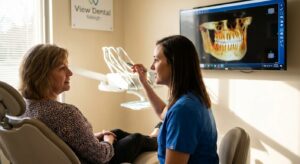
Once you know the cleaning may be covered, the next question is what you actually get. A preventive visit at View Dental Raleigh goes beyond a polish. It pairs the cleaning with a comprehensive dental exam, an oral exam, an oral cancer screening, and digital X-rays when they are due. Fluoride treatments and sealants may be applied during the visit when they are clinically appropriate, in line with the American Dental Association’s guidance on dental sealants.
Here is what each part does for you:
- The cleaning: removes hardened plaque (tartar) that brushing cannot reach, especially along the gumline and between the back teeth.
- The comprehensive exam: checks every tooth, your gums, your bite, and existing fillings or crowns for wear or breakdown at the margins.
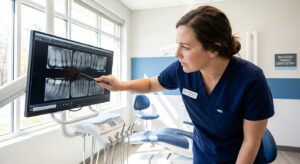
- Digital X-rays: show decay between teeth and under old fillings that no one can see by looking, with less radiation than traditional film.
- The oral cancer screening: a visual and hands-on check of your tongue, cheeks, throat, and the floor of your mouth.
- Fluoride and sealants: fluoride strengthens enamel, and sealants are thin protective coatings placed in the deep grooves of back teeth, where many childhood cavities begin.
The phrase “when appropriate” matters. We do not apply sealants to every tooth on every child by default. A 7-year-old whose first permanent molars just came in may be a candidate, while a teenager whose molars already have fillings may not benefit the same way. We make that call based on what we see, and we explain why.
If your child is nervous, ask the hygienist to explain each step before it happens. Children often do better when they know what the next tool is for. Your concerns about your child’s comfort are part of the visit, not an interruption to it.
Which Medicaid Plans Does View Dental Raleigh Accept?
View Dental Raleigh accepts North Carolina Medicaid and serves families across Raleigh. Dental coverage can work differently from the medical plan named on your card, so the fastest way to confirm your benefits is to call us with your Medicaid ID number.
Most North Carolina Medicaid members are enrolled in a prepaid health plan, or PHP, for their medical care. Each PHP has its own provider network and rules, and many parents assume that plan also sets their dental benefits. That is not always how it works. Dental coverage in North Carolina generally follows the state’s Medicaid dental rules, which depend on the patient’s age, eligibility group, and the specific procedure. The plan name is helpful when you call, but your Medicaid ID and each family member’s date of birth are what let us check eligibility accurately.
This confusion is common right now. North Carolina expanded Medicaid in December 2023, and many Raleigh adults have dental benefits for the first time. If you are one of them, you may be asking “does Medicaid cover dental cleanings for adults, or just for my kids?” You may also wonder which services need approval and which offices will see you. Those are fair questions to ask on the phone, and we would rather answer them before your visit than after.
Along with Medicaid, View Dental Raleigh accepts Cherry financing and cash pay. If one family member has Medicaid and another does not, you can still bring everyone to the same office. Ask our front desk whether back-to-back appointments are available so you may avoid taking several days off work.
What Happens If the Dentist Finds a Cavity or Other Problem During My Cleaning?
This is the question behind most of the calls we get. When the hygienist or dentist finds decay, gum disease, or another problem during a covered cleaning, we tell you the clinically ideal treatment first. Then we walk you through what Medicaid may cover for that procedure, what you might pay out of pocket, and whether financing could spread the cost into monthly payments.
You might worry that a covered cleaning is the setup for a large bill. That worry is reasonable, and we will be direct about how we handle it. Finding a problem does not mean you must fix it that day. It means you now know about it, and you have options.
We lead with the ideal because you deserve to know what the best clinical outcome looks like, even if you do not choose it today. Only after that do we factor in your health, your goals, your timing, your finances, your insurance benefits, and whether you can realistically maintain the treatment over the years. For each option, we cover the benefits, limitations, expected maintenance, timing, and cost. Our job is to separate urgent problems from issues that can be addressed over time.
Here is a common scenario. The X-rays show a small cavity between two back teeth that you cannot feel yet. We explain that a small filling now is usually simple, but if it waits, the decay can reach the nerve and turn into a root canal or an extraction. We tell you how Medicaid may treat the filling, and you decide the timing. Nothing beyond the cleaning happens without you understanding it and agreeing to it.
Does Medicaid Cover Fillings, Crowns, and Extractions in North Carolina?
Cleanings are only part of the picture, so it helps to know what happens when a tooth needs more. For children under 21, North Carolina Medicaid covers comprehensive dental services, including fillings, crowns, and extractions when they are medically necessary, though coverage depends on individual eligibility and clinical circumstances. Adult Medicaid dental benefits are more limited. Coverage depends on the specific procedure, and some restorative work requires prior authorization.
The difference between children and adults comes from federal rules. Under Medicaid’s children’s benefit, known as EPSDT, states must cover the dental services children need. For adults, states decide how much dental care to cover, and there is no federal minimum. That is why your child’s coverage and your own can look so different, even though you both have Medicaid.
Prior authorization means we send your X-rays and clinical notes to Medicaid before certain treatment and wait for approval before starting. For you, it mostly affects timing, because a procedure that needs approval may not happen at your next visit. If the tooth is painful or infected, we deal with that first so you are not suffering while the paperwork moves.
For adults, coverage can shape which path makes sense for a damaged tooth. Say you have a cracked molar. The first question is clinical: can this tooth be predictably saved, or is it one that may keep causing trouble? If it is salvageable but a crown is limited or not covered for you, we explain the options side by side. Those may include an extraction now with a replacement later, or a staged plan toward the crown. A coverage limit narrows your choices, but it is not a dead end.
Can I Get an Emergency Dental Appointment If I Have Medicaid?
Yes. Emergency dental visits for pain, swelling, or infection are generally covered under NC Medicaid, including the exam and imaging needed to find the problem, though coverage varies by individual plan. View Dental Raleigh offers emergency appointments and pain relief treatments. Call as early in the day as you can for the best chance of being seen quickly.
Many Medicaid holders assume emergency care means a long wait or a trip across town. We keep room for emergency visits because pain and infection should not wait for the next open cleaning slot. When you call, describe what you feel, such as throbbing, swelling, a broken tooth, or a bad taste around a tooth. That helps us prepare before you arrive.
An emergency visit has one first goal: find the cause and help relieve your pain when clinically possible. We are looking beyond the tooth that hurts today, but we are not going to hand you a huge plan while you are hurting. If the cause is an infected nerve, we explain whether the tooth can be treated with root canal therapy or should be removed. We tell you what coverage may apply, and we address the infection. The longer-term conversation can happen once you feel better.
One safety note: if facial swelling is spreading quickly, or you have trouble breathing or swallowing, go to an emergency room right away. Those signs can mean a serious infection that needs hospital care first. Once you are stable, we can treat the dental source.
How Much Will I Pay Out of Pocket for a Medicaid Cleaning?
Cost is the other half of the question most families bring to us. For most patients, a covered preventive cleaning may carry little or no out-of-pocket cost, though this varies based on individual coverage details. Anything beyond the cleaning depends on your coverage and on the procedure your mouth actually needs, and we confirm those details for your situation before treatment.
We finish your exam and any needed 3D imaging before we give you a total treatment price or a monthly payment estimate. A meaningful number depends on what the images and clinical findings reveal, not on a generic fee schedule. A number quoted over the phone before anyone has looked at the tooth is a guess, and guesses are how surprise bills happen.
After the exam, you get a clear breakdown. It lists each recommended procedure, what Medicaid may pay, your portion, and a monthly payment estimate if you want to finance part of it. If you have three children and yourself to plan for, you can see the whole family’s picture at once and decide what to do first.
This matters most for parents who build a household budget around fixed numbers. Your financial reality is part of the treatment plan, not something we pretend is not there. If a number does not work, tell us, because there is usually more than one clinically sound way forward.
What If Medicaid Does Not Cover the Treatment I Need?
Sometimes the answer to “does Medicaid cover dental cleanings” is yes, but the work you need after the cleaning falls outside your benefits. When the ideal plan is not financially realistic, we keep two things separate: the ideal destination and the most appropriate next step from where you are today. We sequence care in phases, with pain and infection first. Third-party financing such as CareCredit, along with the Cherry financing we accept, can spread the remaining cost into manageable monthly payments.
A phased plan usually looks like this:
- Phase one: address pain and remove infection when clinically possible, often with covered emergency care or extraction of teeth that cannot be saved.
- Phase two: control active decay with tooth-colored fillings, so small problems do not become larger ones while you plan.
- Phase three: restore function, comfort, and appearance over time with crowns, bridges, a partial denture, or implants as your budget and benefits allow.
The order matters. Treating a painful infection first protects your health and may buy you time. Controlling decay next helps preserve the teeth that can be saved from getting worse. The longer-term restorations can then happen on a schedule that fits your life, often across more than one benefit year.
Here is how that can play out. One adult patient needed several fillings, one extraction, and eventually a tooth replacement. Medicaid covered some of that work, but the replacement fell outside coverage. Instead of stopping at “not covered,” we built a roadmap. We took care of the covered, urgent work first, and we planned to finance or save for the replacement. In the meantime, we offered a temporary option, such as a partial denture, to keep the patient comfortable. The patient knew the destination and the next step, and nothing was hidden.
Why Choose View Dental Raleigh for Medicaid Dental Care?
You may have been to an office where you felt hurried, or where you felt treated like a number once your coverage came up. At View Dental Raleigh, your Medicaid card does not change the time we spend with you, the questions we answer, or how carefully we read your X-rays. We spend the first part of any planning visit asking what you ultimately want to accomplish, for your own mouth and for your kids’. We are not simply trying to fix one problem and move on.
Our lead dentist has pursued years of specialized training beyond dental school, including immersive courses in implant placement, bone grafting, full-arch rehabilitation, and the surgical and restorative sides of complex cases. This background allows us to plan complete solutions under one roof. When a cleaning uncovers a failing tooth, the same dentist who sees you for preventive visits can map out the extraction, the replacement, and the order in between, drawing on direct experience with both simple and complex reconstructions.
View Dental Raleigh offers comprehensive care under one roof. That includes cleanings, sealants, tooth-colored fillings, crowns, bridges, root canal therapy, extractions, dentures, implant-supported dentures, and dental implants. Your family does not have to be split across several offices as needs change, and the treatment plan stays with one team that knows your history. Our approach is compassionate and customized, and we use advanced technology like digital X-rays and 3D imaging to help make diagnoses more precise.
If you are weighing restorative or cosmetic work down the road, ask us to show you before-and-after examples of cases planned in the right sequence. Each person’s experience with treatment varies based on their individual mouth, health, compliance with care instructions, and many other factors, and we will always tell you honestly what may be realistic for yours.
Before you call, gather three things: your Medicaid ID number, each family member’s date of birth, and the approximate date of each person’s last cleaning. With those in hand, our front desk can usually tell you during the same call whether each cleaning may qualify now or needs to wait a few weeks. That one detail, the date of the last cleaning, is often the difference between a smooth first visit and an avoidable bill.
Call View Dental Raleigh today to verify your North Carolina Medicaid benefits, confirm coverage for your family’s cleanings, and schedule your appointment.
Let’s Verify Your Coverage Together
If you’ve been putting off a dental cleaning because you’re unsure what your Medicaid plan covers, you’re not alone. The team at View Dental Raleigh can check your specific benefits and help you understand your options before you even schedule. We’ll walk you through it in plain language so you can make the decision that’s right for your smile.
Individual results from dental treatment vary based on each person’s oral health, medical history, bone quality, compliance with post-treatment care instructions, hygiene habits, and other factors.