
A dental abscess doesn’t give you the luxury of time. It’s a bacterial infection that spreads, worsens, and in serious cases sends people to the emergency room. Understanding dental abscess symptoms and treatment isn’t just useful information , it’s the difference between saving a tooth and losing one, or in rare cases, between a dental appointment and a hospital admission.
What Is a Dental Abscess
A dental abscess is a pocket of pus caused by a bacterial infection inside a tooth, in the gum tissue, or in the bone holding a tooth in place. According to data from the National Center for Health Statistics, dental infections account for roughly 786,000 emergency department visits in the United States each year, many of them preventable with earlier treatment. This is not a condition to monitor from home and see how it feels in a few days.
The Three Types You Need to Know
There are three distinct types, and the type determines the treatment path. A periapical abscess forms at the tip of the tooth root, typically from bacteria that enter through a cavity or crack. A periodontal abscess develops in the gum tissue beside the root, usually connected to gum disease. A gingival abscess is confined to the gum tissue itself, often triggered by a foreign object lodged in the gum. Each requires a different approach, which is why self-diagnosis isn’t enough and why imaging is part of every proper evaluation.
Symptoms of a Dental Abscess
A 2019 analysis published in the Journal of Endodontics examining emergency dental presentations found that a significant share of patients had experienced symptoms for more than 72 hours before seeking care, often because they misread early warning signs as temporary sensitivity or a minor ache. Don’t make that mistake.
The full symptom picture includes a throbbing or persistent toothache that doesn’t respond to over-the-counter pain relievers, sharp sensitivity to hot or cold temperatures, pain when biting or pressing on the tooth, visible swelling in the face or cheek, swollen and tender lymph nodes under the jaw or in the neck, fever, and a foul taste or sudden rush of salty fluid in the mouth if the abscess ruptures.
That last point deserves direct attention. When an abscess ruptures and drains, the pain often drops sharply. That relief is deceptive. The infection is still present in the surrounding tissue and bone. The bacteria haven’t been eliminated , they’ve just found a temporary exit. Stopping treatment because the pain eased is how a manageable infection becomes a serious one.
If any of these symptoms have lasted more than 24 to 48 hours, that is your window to act. Waiting for the pain to return before calling a dentist adds days to an infection that has already been growing.
When Symptoms Mean a Same-Day Emergency
There’s a meaningful difference between “call your dentist first thing tomorrow” and “go to an emergency room right now.” Some symptoms cross that line.
Go to an emergency room immediately if you have difficulty swallowing or breathing, swelling that extends to the jaw, neck, or floor of the mouth, a high fever above 101°F paired with facial swelling, confusion or feeling systemically unwell, or an inability to fully open your mouth. These are signs of Ludwig’s angina or spreading cellulitis, both of which can obstruct the airway. A 2021 review in the Journal of Oral and Maxillofacial Surgery documented dental-origin sepsis as a growing cause of ICU admissions, with a mortality rate that climbs sharply when treatment is delayed beyond 24 hours of systemic symptoms.
If swallowing feels different than normal, stop searching for answers online and go to an emergency room. That single symptom is enough. For situations that don’t reach that threshold but still involve acute pain or visible swelling, finding same-day dental care in Raleigh is the right first call.
What Causes a Dental Abscess
Bacteria enter the tooth or gum through a crack, an untreated cavity, or the pockets created by gum disease. Once inside, they multiply in an environment with no natural drainage route, which is what creates the pressure and pus characteristic of an abscess.
The American Dental Association has documented a direct link between untreated decay and abscess formation. A cavity that hasn’t been filled gives bacteria a direct path to the pulp, where the nerve and blood vessels are. From there, the infection travels to the root tip and into the surrounding bone.
The primary risk factors are straightforward: poor oral hygiene, a high-sugar diet that feeds bacterial growth, dry mouth (which removes saliva’s protective function), a weakened immune system from illness or medication, and previous dental trauma that cracked or fractured a tooth without visible symptoms at the time. After your treatment is complete, identify which of these applies to you. That’s the one to address first, because it’s also the one most likely to cause a recurrence.
How a Dentist Diagnoses a Dental Abscess
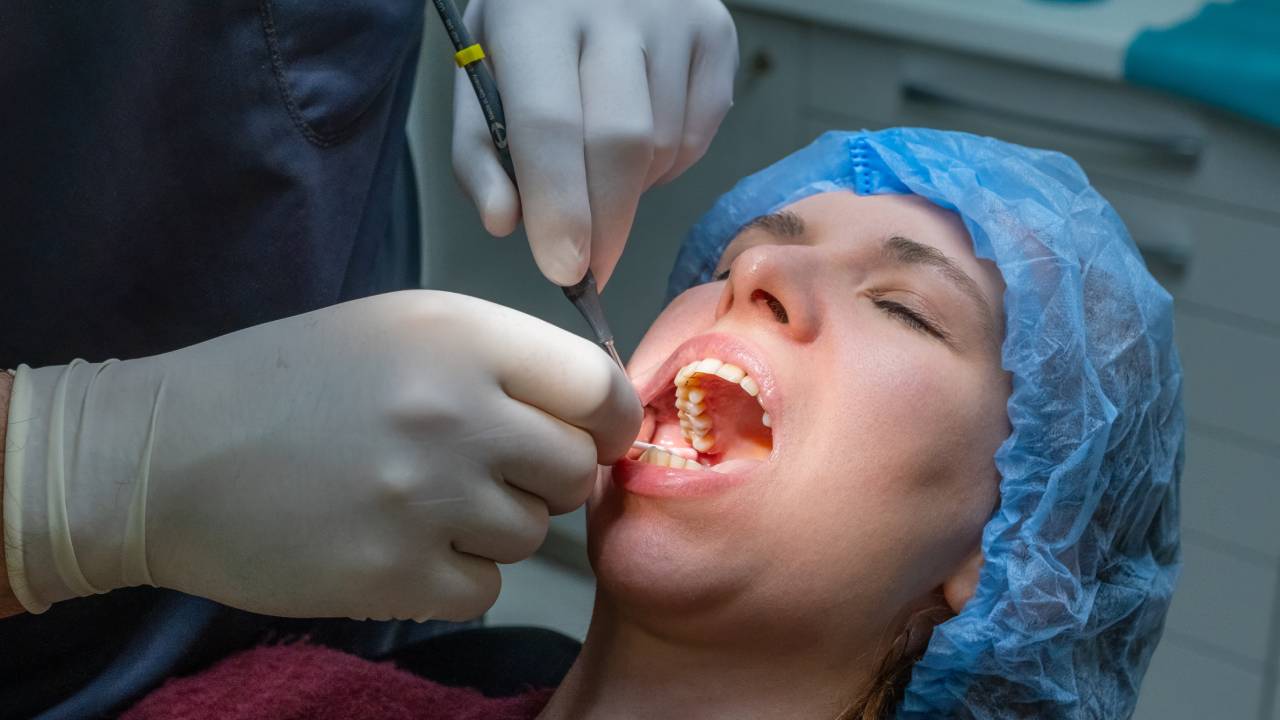
The diagnostic process is faster and less complicated than most people expect. The dentist taps on individual teeth to locate the source of pain, probes along the gum line to detect swelling or discharge, and takes X-rays to identify bone loss or a dark shadow at the root tip indicating infection. If there’s any concern the infection has spread beyond the tooth or into surrounding tissue, a cone beam CT scan provides a three-dimensional view of the jaw and adjacent structures.
A 2020 study in the Journal of the American Dental Association found that radiographic imaging changed the treatment plan in approximately 40% of abscess cases where infection had spread beyond what clinical examination alone revealed. What this means in practice: the X-ray isn’t a formality. It’s what tells the dentist whether a root canal can save the tooth or whether extraction is the only option.
Knowing what to expect in the chair reduces the anxiety that keeps people from booking the appointment at all. The evaluation is quick, and the sooner it happens, the more options remain on the table.
Dental Abscess Treatment Options
Treatment isn’t a menu you choose from based on preference. It’s a decision driven by how far the infection has spread. According to the American Association of Endodontists, outcomes are significantly better when abscesses are treated in the early stage before bone loss becomes extensive. Every day of delay shifts the available options.
Root Canal Treatment
A root canal removes the infected pulp from inside the tooth, cleans and shapes the canal, and seals it to prevent reinfection. The tooth stays in place. The American Association of Endodontists reports root canal success rates above 95% when the procedure is performed before infection has significantly compromised the surrounding bone.
If a dentist mentioned a root canal at a previous appointment and you delayed it, that delay is the single biggest risk factor for the abscess you may be experiencing right now. The path forward is to call and get that treatment scheduled, not to wait for the pain to ease again.
Tooth Extraction
Extraction becomes necessary when the infection has destroyed too much of the tooth structure to make saving it viable, or when the bone loss around the root is too advanced for a root canal to succeed. Extraction is not a failure. It stops the infection from spreading to adjacent teeth and into the jaw.
Replacement options, including dental implants and bridges, are more straightforward to place and integrate when the infection is fully resolved and the surrounding bone is healthy. Before you consent to an extraction, ask the dentist directly whether the tooth can be saved. If same-day removal is the right call, knowing what to expect from the procedure helps you move forward with confidence rather than hesitation.
Incision and Drainage
When significant swelling is present, the dentist makes a small incision in the abscess to drain the pus directly. The relief is immediate and substantial. This procedure also reduces the bacterial load, which makes antibiotics more effective when they’re prescribed alongside it.
A clinical review published in Oral Surgery, Oral Medicine, Oral Pathology, and Oral Radiology found that drainage prior to antibiotic administration improved resolution rates compared to antibiotics alone. Drainage is typically a first step, not a final one. A follow-up procedure to address the source of the infection is always required afterward.
Antibiotics and Pain Management
Antibiotics treat the systemic spread of infection. They do not reach the inside of a tooth or eliminate an abscess on their own. The ADA’s antibiotic prescribing guidelines are explicit on this point: antibiotics are an adjunct to dental treatment, not a replacement for it. Prescribing antibiotics without a follow-up procedure addresses the symptom, not the cause.
For pain management while waiting for your appointment, ibuprofen (if you can take NSAIDs) is more effective than acetaminophen for dental pain because it addresses inflammation as well as pain signal transmission. Use it as a bridge, not a solution. If a doctor has prescribed antibiotics for a dental infection without scheduling a follow-up dental procedure, book that appointment before the antibiotic course ends. The window between finishing antibiotics and the infection returning is narrow.
Complications of Leaving a Dental Abscess Untreated
Three named complications define what happens when a dental abscess goes untreated. Cellulitis is a spreading soft tissue infection that moves through the face, neck, and jaw without following the boundaries of the original tooth. Ludwig’s angina is a rapidly progressing bacterial infection of the floor of the mouth that can close the airway within hours. Sepsis occurs when the infection enters the bloodstream and triggers a systemic inflammatory response that can lead to organ failure.
A 2017 study in BMC Oral Health analyzing dental-origin hospitalizations found that the majority of patients admitted for serious dental infections had experienced symptoms for more than one week before seeking care. The cost of that delay, financially and physically, consistently exceeded what early treatment would have required.
If you’ve been managing abscess pain at home with painkillers for more than a few days, today is the day to call. Not tomorrow. Recognizing the point at which pain becomes an emergency is something you can do right now, before the situation escalates further.
How to Prevent a Dental Abscess
Prevention comes down to four behaviors with strong evidence behind them. Brush twice daily with fluoride toothpaste. Floss once daily to remove the bacterial biofilm that forms between teeth where a brush can’t reach. Limit fermentable sugars, the fuel source that allows cavity-causing bacteria to thrive. And attend dental cleanings twice yearly, including X-rays.
A 2018 study in the Journal of Dental Research found that patients who attended regular professional cleanings had a significantly lower incidence of untreated decay progressing to the pulp, the precursor to most periapical abscesses. The cleaning isn’t just about polish. It’s when early cavities and cracks are caught before they become infections.
If your last cleaning was more than six months ago, schedule it this week. Not after symptoms appear.
Act on This Today
If you’re reading this because something in your mouth hurts right now, the search for information is over. Throbbing pain, visible swelling, fever, or a bad taste that came on suddenly , any one of these means it’s time to call a dental office, not to read one more article.
Dental abscesses don’t resolve on their own. The infection doesn’t clear without treatment, and every day it remains untreated narrows your options. A tooth that can be saved today may not be savable in a week. Call now, describe your symptoms, and ask for the earliest available appointment. Same-day care exists for exactly this situation.