
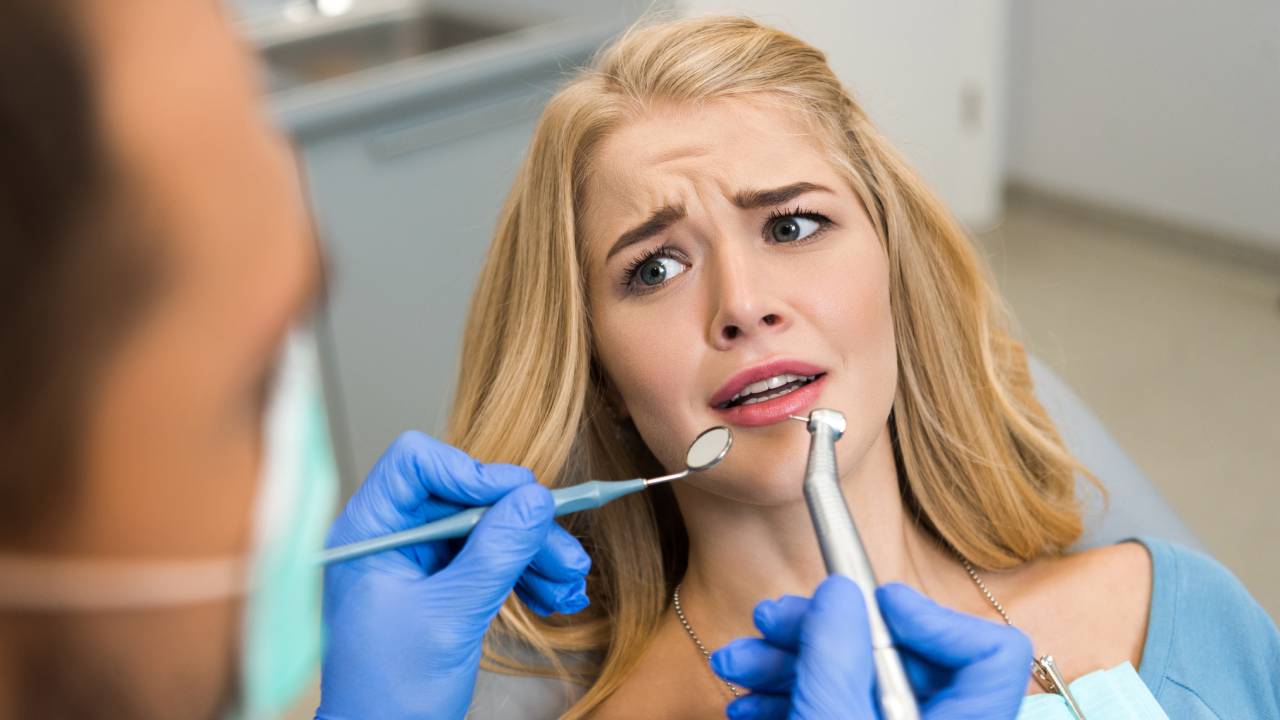
Every year, roughly 2 million Americans end up in hospital emergency rooms for dental problems that a dentist’s office should have handled. If you’re searching “what counts as a dental emergency” right now, you probably don’t have time for a textbook explanation. Here are the seven signs that demand same-day care, plus exactly what to do while you wait.
What a Dental Emergency Actually Is
A dental emergency is any situation where waiting 24 to 48 hours risks permanent tooth loss, an infection spreading beyond your mouth, or pain severe enough to be disabling. That’s the line. Everything else, a minor chip, a slightly loose crown with no pain, a small area of sensitivity, falls into the “schedule within a few days” category.
The distinction matters more than most people realize. According to the American Dental Association, non-traumatic dental conditions account for approximately 2.1 million emergency room visits annually in the United States. Most of those patients waited too long on the real emergencies or showed up at an ER for something a dentist could have handled in 30 minutes. Knowing which situation you’re in determines both your outcome and your cost.
The seven signs below mark the emergency side of that line.
Red-Flag Sign #1: Severe, Unrelenting Toothache
Intense, throbbing tooth pain is never just discomfort. When pain is this level, it signals one of three things: nerve involvement from deep decay, a bacterial infection inside the tooth (pulpitis), or structural damage that has compromised the pulp. None of these resolve on their own.
A 2019 study published in the Journal of Endodontics examining over 1,400 patients found that untreated pulp infections progressed to periapical abscess in the majority of cases within weeks, with a meaningful percentage developing signs of systemic spread including fever and lymph node swelling. Waiting on this is not a neutral choice.
The practical threshold is simple: if over-the-counter pain relief doesn’t meaningfully dull the pain within an hour, that’s your signal to call a dentist today, not tomorrow. If you need guidance on what to do before you reach the chair, there are specific steps that can help manage pain in the window before your appointment.
Red-Flag Sign #2: A Knocked-Out Tooth
A knocked-out (avulsed) tooth has a narrow biological window for successful reimplantation. The periodontal ligament cells attached to the tooth’s root begin to die within minutes of exposure to air. According to the American Association of Endodontists, reimplantation success rates drop sharply after 30 minutes outside the mouth, and after 60 minutes the prognosis becomes poor regardless of what’s done next.
What to do immediately: pick the tooth up by the crown, not the root. Rinse it gently with water, no scrubbing, no soap. Store it in milk or tuck it between your cheek and gum to keep those cells alive. Then get to a dentist within the hour. Not later today. Within the hour.
This is one scenario where the clock is genuinely ticking in measurable minutes. A 2020 study in Dental Traumatology of 312 avulsion cases found that patients who arrived within 30 minutes had reimplantation success rates above 85%. Those who waited more than 90 minutes dropped to below 20%.
Red-Flag Sign #3: A Cracked or Fractured Tooth
Not all cracks are equal. A minor chip on the edge of a tooth with no pain is not an emergency. A crack that runs vertically toward the root or cuts deep enough to reach the pulp is a different situation entirely.
The mechanism behind the urgency: bacteria enter a deep crack rapidly, and the internal environment of a fractured tooth accelerates infection faster than standard decay. A 2018 study in the Journal of Endodontics found that vertical root fractures led to tooth loss in over 90% of cases when treatment was delayed beyond two weeks from symptom onset. The tooth doesn’t get a chance to “settle.”
Signs a crack has crossed into emergency territory include sharp pain when biting, pain that lingers after releasing pressure, or sensitivity to temperature that spikes rather than fades. Avoid chewing on that side and call for a same-day appointment.
Red-Flag Sign #4: Dental Abscess or Facial Swelling
This is the highest-stakes item on the list. A dental abscess is a bacterial infection, and bacterial infections in the head and neck region can spread to the jaw, the throat, and the airway. There are documented fatalities from untreated dental abscesses, and they are not rare historical cases.
The CDC has identified odontogenic infections (those originating in a tooth) as a leading cause of serious sepsis presentations in otherwise healthy adults. A 2013 analysis published in the Journal of Oral and Maxillofacial Surgery found that hospitalizations from dental abscesses increased 40% over a decade, with a significant portion involving airway compromise.
Facial swelling alongside tooth pain, fever with a toothache, or a pimple-like bump on the gums that oozes: all of these mean emergency care today. If you want to understand the full picture of what’s happening biologically, recognizing the signs of a spreading dental infection gives you the complete breakdown.
When Swelling Becomes Life-Threatening
There is a specific progression called Ludwig’s angina where infection from a lower tooth spreads into the floor of the mouth and the submandibular space. It can obstruct the airway within hours. The warning signs that mean calling 911 rather than driving to a dental office are: difficulty swallowing, trouble breathing, swelling that visibly extends to the neck, or swelling that pushes your tongue upward. At that point, a dental appointment is not the right destination. Call emergency services first.
Red-Flag Sign #5: Loose or Partially Dislodged Tooth (in Adults)
Adult teeth should never be loose. If one is, it signals either significant trauma, advanced bone loss from periodontal disease, or both. The tooth’s supporting structures have been compromised enough that the tooth is no longer stable.
A 2021 study in the Journal of Clinical Periodontology tracked 640 patients with moderate-to-severe periodontitis who delayed treatment. Teeth presenting with mobility at baseline were lost within 18 months in over 70% of cases where treatment was delayed more than six months. The window to save a loose adult tooth is real, but it closes.
Children losing primary (baby) teeth is a different situation and not an emergency. But if you’re an adult and a tooth is moving in its socket after an injury or has developed mobility gradually, call the same day. Do not try to push it back into position. Bite gently on gauze to stabilize it and keep it still until you’re seen.
Red-Flag Sign #6: Uncontrolled Bleeding in the Mouth
Bleeding that doesn’t stop after 10 to 15 minutes of firm, continuous pressure is an emergency. This covers trauma to the gums or soft tissue, a tooth that was recently extracted, or spontaneous gum bleeding severe enough to be more than a trace.
A 2017 clinical review in the British Dental Journal on post-extraction hemorrhage found that prolonged bleeding occurred in approximately 0.5 to 5% of extractions, with contributing factors including anticoagulant medications, underlying clotting disorders, and infection at the extraction site. The mechanism: a blood vessel in the socket has not sealed, or a clot has been disturbed and cannot reform.
Apply firm, continuous pressure with clean gauze, not dabbing, actual sustained pressure for at least 10 minutes without lifting to check. If bleeding continues beyond 20 minutes of sustained pressure, treat it as an emergency. Do not use aspirin for pain during this scenario because it thins the blood and actively worsens clotting.
Red-Flag Sign #7: Lost Crown or Filling With Exposed Nerve Pain
A lost filling or crown that causes mild temperature sensitivity is something to address within a few days, not necessarily the same day. But when the nerve beneath is exposed and you’re experiencing sharp, spiking pain from air, cold liquids, or heat, the urgency level changes.
Research on dentin hypersensitivity published in the Journal of Dentistry has established that exposed dentin tubules allow thermal and chemical stimuli to reach the pulp directly. When a filling loss has exposed enough of the tooth that the pulp is essentially unprotected, bacterial invasion and progression to pulpitis happen faster than most patients expect, often within days.
Temporary fix while you wait: dental cement from a pharmacy, or in a pinch, a small piece of sugarless gum pressed into the cavity, provides a physical barrier that reduces stimulus transmission and slows bacterial entry. Call for a same-day appointment. This is not a situation to manage with temporary measures for a week.
What Is Not a Dental Emergency
Some situations feel alarming but don’t require same-day emergency care. A minor chip on a tooth that isn’t causing pain can wait for a scheduled appointment. A loose orthodontic wire that’s irritating but not puncturing tissue is uncomfortable but not an emergency. Mild, intermittent sensitivity to cold that resolves in seconds is worth mentioning at your next checkup but doesn’t require an urgent call.
A lost crown with no pain underneath is worth calling about but doesn’t necessarily require same-day treatment. Cover the tooth to prevent sensitivity and schedule within a day or two.
The reason this matters: a 2017 Health Affairs study estimated that non-emergency dental visits to hospital ERs cost the U.S. healthcare system approximately $1.6 billion annually, with most patients discharged with only pain medication and a referral they didn’t need an ER visit to get. Triaging accurately saves you time, money, and a long ER wait for something a dental office handles better and faster.
What to Do While You Wait for Your Appointment
Pain management while you wait has limits, but they’re useful limits. Ibuprofen (if you can take it) works better than acetaminophen for dental pain because it addresses inflammation alongside pain signals. Take it as directed on the label, not beyond. Do not place aspirin directly on gum tissue; it causes a chemical burn.
For swelling, a cold compress on the outside of the face in 10-minute intervals reduces inflammation and numbs the area. Do not apply heat to a swollen area. Heat increases blood flow to an already inflamed site and accelerates bacterial spread.
Rinsing with warm salt water (about half a teaspoon of salt in 8 ounces of warm water) keeps the area clean without the harshness of mouthwash, which can irritate already compromised tissue. For a knocked-out tooth situation, store the tooth in milk and do not rinse the root socket.
One thing to avoid across all emergency scenarios: probing, pressing, or manipulating the affected area beyond what’s necessary. The instinct to test the pain or check whether a loose tooth has moved is understandable, but repeated movement and pressure make all of these situations worse.
How to Prevent the Most Common Dental Emergencies
A 2019 study by the National Collegiate Athletic Association found that mouthguard use among contact-sport athletes reduced the incidence of dental trauma by approximately 60%. Custom-fitted mouthguards, made by a dentist from an impression of your teeth, outperform stock or boil-and-bite versions significantly in retention and protection coverage. If you or your children play contact sports in the Raleigh area, this is the single highest-leverage step for avoiding traumatic dental emergencies.
The second highest-leverage prevention move is consistent preventive care. Most of the infections, abscesses, and structural failures described in this article start as conditions a dentist can see and treat at a routine checkup. A small cavity costs a fraction of an abscess treatment. Gingivitis costs less to reverse than bone loss. For busy families and working professionals, the math on regular checkups is straightforward: an hour twice a year prevents emergencies that take multiple same-day appointments to address.
If any of the seven red-flag signs are present right now, the next step is not finishing this article. Find an emergency dental provider in Raleigh who offers same-day appointments and call that number first. Save it in your phone for future reference once this situation is resolved.
Which Sign Are You Dealing With?
Run back through the seven signs one more time. Uncontrolled bleeding, facial swelling with fever, a knocked-out tooth, severe pain unresponsive to OTC medication: these are call-right-now situations. A cracked tooth with pain on biting, a lost filling exposing a sensitive nerve, a loose adult tooth: call today for a same-day slot. A minor chip with zero pain, a lost crown with no discomfort: call within the next day or two.
The pattern is consistent: when infection or structural damage is active, time works against you. When it’s a protective covering that’s been lost but the underlying tooth is stable, you have slightly more buffer. The moment you feel genuine uncertainty about which category you’re in, err toward calling sooner. The cost of a same-day appointment you didn’t strictly need is minor compared to the cost of waiting on something that was, in fact, an emergency.